The physical form of a fuel determines how it burns, and has a big impact on the design and operation the kiln. Empirical rules established for solid fuel kilns a century or more ago are still widely quoted as fundamental principles of kiln design in the pottery community, but may be completely inappropriate for gas-fired or oil-fired kilns. This article explains some of the important differences between gas, liquid and solid fuels and the implications for design, operation and fault-finding in modern studio kilns.
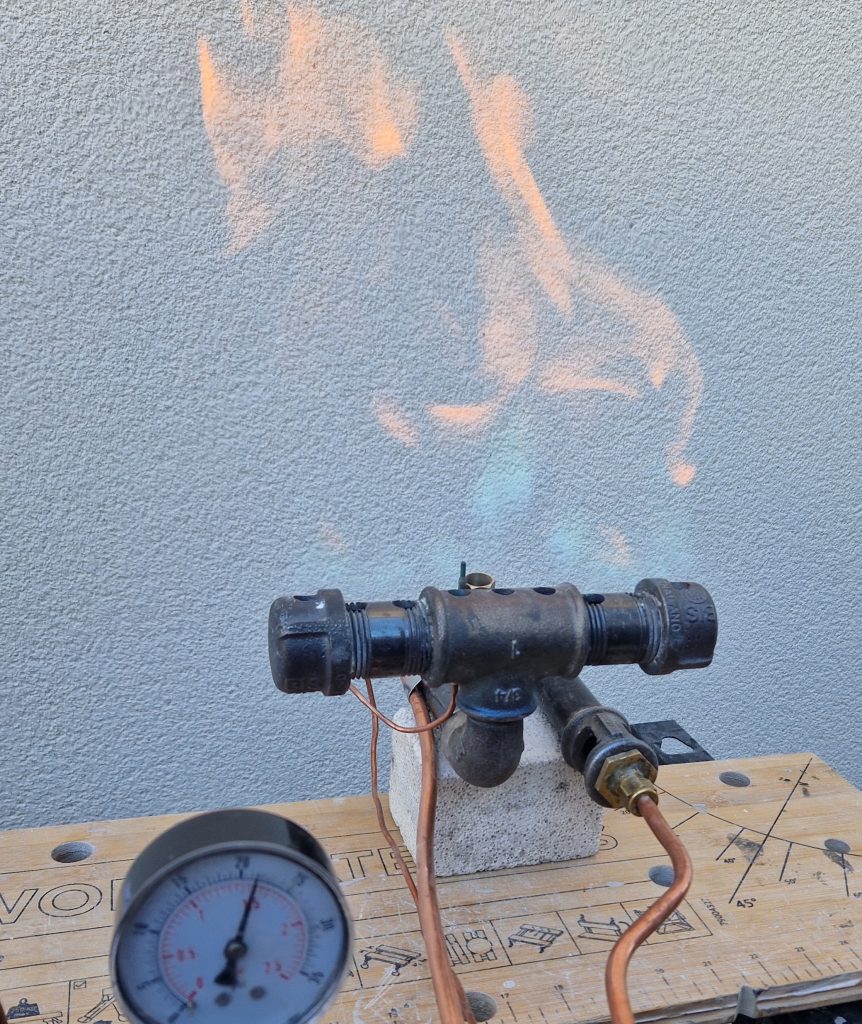
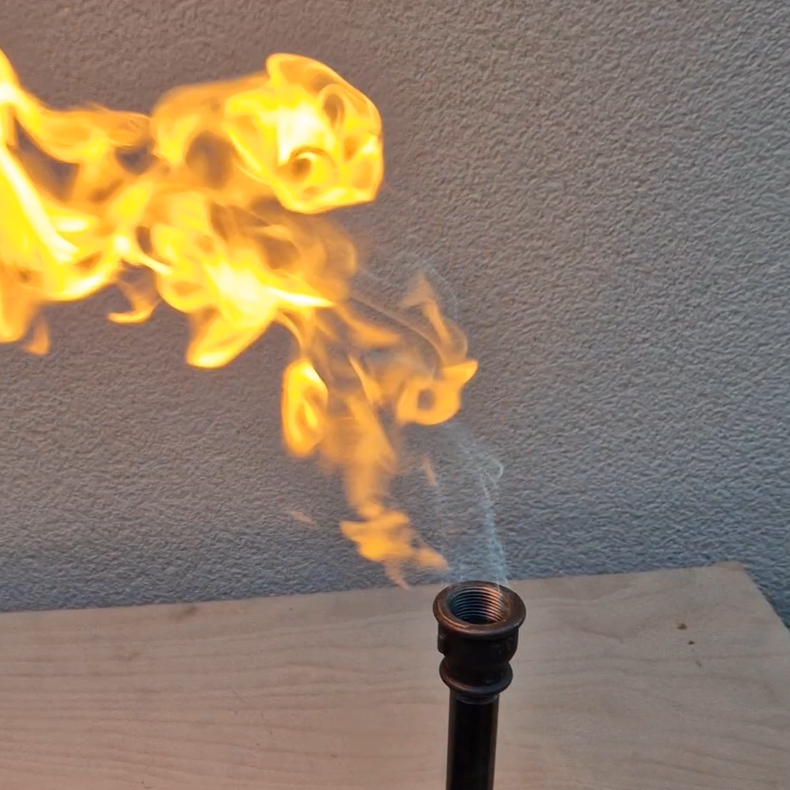
Fire burns when fuel molecules and oxygen molecules meet and react, releasing energy in the form of heat. This combustion process requires the molecules to be close together, so fuel usually needs to mix well with oxygen in the air. Flames can either be produced from premixed air and fuel, or can burn with diffusion flames without premixing. The difference between premixed combustion and diffusion combustion without premixing is important and has major implications for the design of ceramic kilns.
Gas Fuels
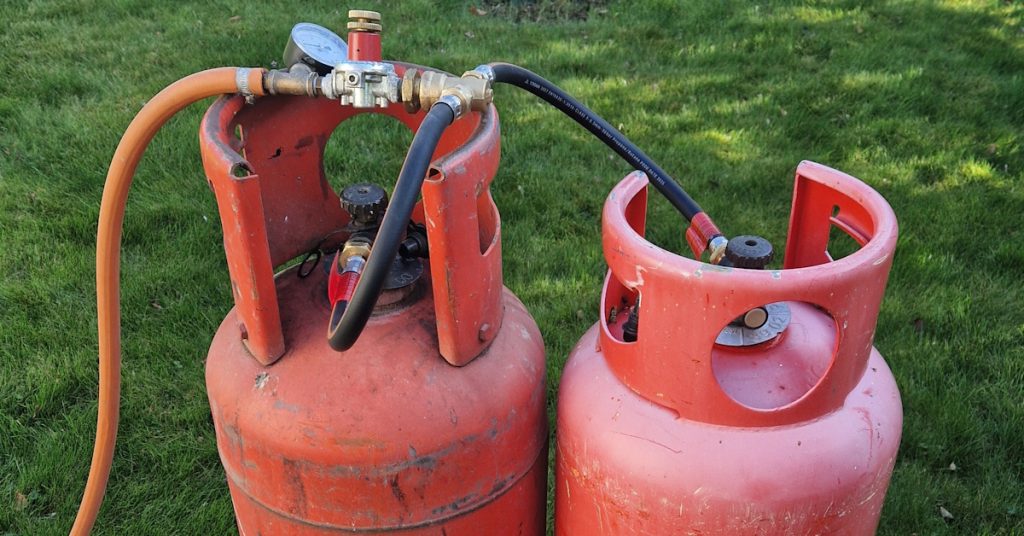
The molecules in gases can move freely and mix very easily with each other, so the gas-air mixture is easily achieved. Natural gas and LPG are produced under controlled industrial conditions with very few contaminants, so they are clean‑burning and highly predictable.
- Simple burners with appropriate controls make it easy to manage heat output and flame length.
- Gas and air are mixed prior to combustion.
- The gas-air mixture is easily controlled to produce oxidising or reducing conditions.
- Fuels such as Natural gas and LPG ignite instantly from a spark when mixed with air.
Gases are supplied under pressure, so simply opening a gas tap ejects gas into the air. The momentum of this moving gas is behind the operating principle of simple gas burners that mix gas with the correct proportion of air for combustion. In many cases, gas-fired kilns don’t rely on the pull of a chimney to draw the flame through the kiln.
Safety is a very important consideration for such flammable materials, so supply and usage is subject to strict regulation that varies in different jurisdictions.
Liquid Fuels
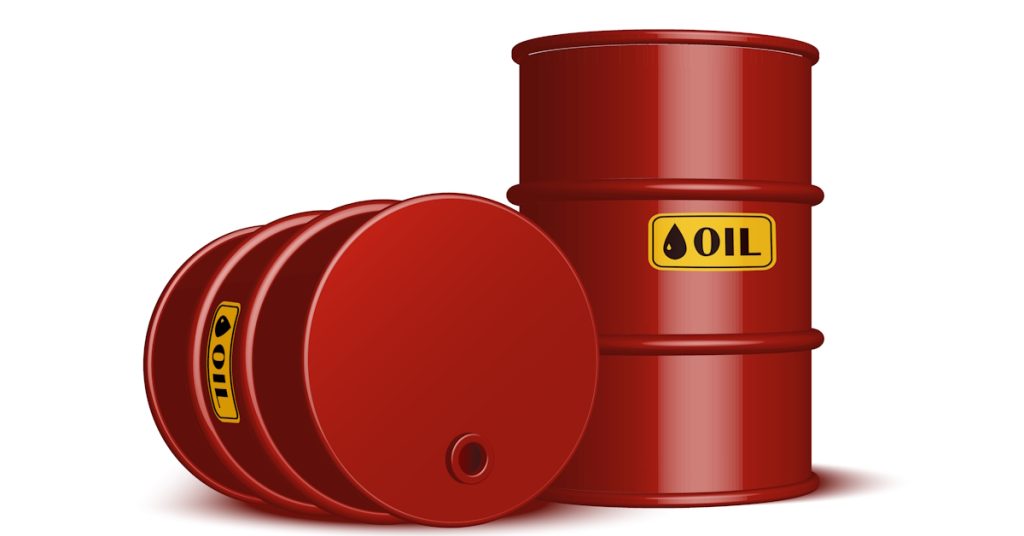
Liquid fuels don’t mix with air as readily as gases, so they must be vaporised or atomised to allow the molecules to get together with oxygen in the air. Fuels like kerosene, heating oil and waste oils have a heavier molecular weight than gases, and often contain long complex hydrocarbon chains that must break apart before combining with oxygen for combustion. They are less highly refined than gas fuels, so they are also likely to include impurities that may affect the firing.
- Oils require sustained heat to break up long molecules and maintain the flame, so they can’t be lit from a small spark.
- Simple burners don’t premix the air and fuel, producing diffusion flames, but premix burners are possible to provide better control.
- As they break up, some of the molecular chains may react with each other instead of burning. This forms carbon rings and lattices, seen as soot particles and smoke.
- Because of this, oil‑fired kilns may have a less predictable atmosphere than gas‑fired ones.
Historically, oil was burnt through the wick of an oil lamp or candle, and in studio kilns, it can be burnt by simply dripping oil onto a heated plate in the kiln. These produce diffusion flames that burn as they progress through the kiln.
Premix burners are possible using a blower to atomise the oil and push the pressurised mixture into the kiln for combustion. Despite premixing, these burners are likely to also include diffusion flames generated by the larger molecules that continue to burn as the mixture passes through the kiln.
Solid Fuels
Solid wood and coal are much more complicated fuels than gas or oil, because they come from an unprocessed mixture of natural organic compounds and structures. The main products of burning are still carbon dioxide, carbon monoxide and water vapour, but there are also mineral residues in the form of ash.
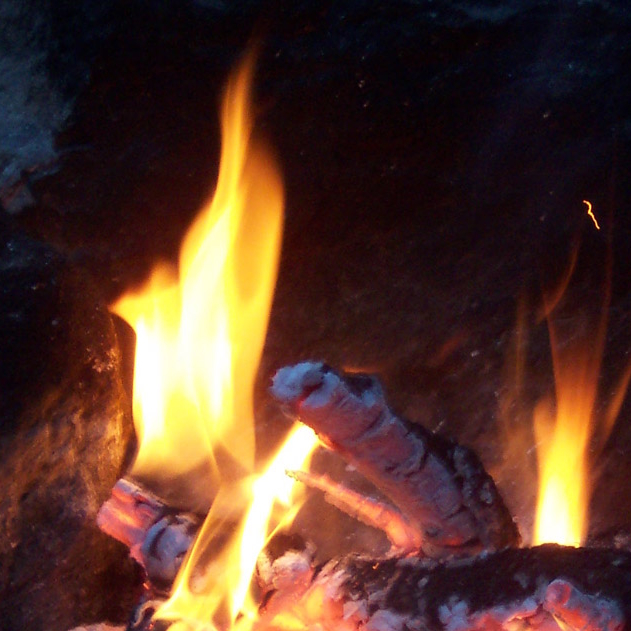
The same scientific principles of combustion apply to solid fuels as to burning gas and oil, but the solid state makes it much more difficult for the molecules to get into contact. In this case, oxygen arrives by bulk airflow, and combustion takes place with diffusion flames persisting as they travel through the kiln. Solid fuels must have a firebox or grate to burn effectively, providing sufficient space to allow for the various stages of combustion to break down the fuel and burn it completely.
Coal
Although coal is seldom referenced as a fuel for studio pottery kilns today, it was the subject of intense research during the industrial revolution in the 18th and 19th centuries. Books published throughout the 20th century draw on this experience, with many current design guidelines being based directly on those 20th century publications and ultimately on that 19th century research.
Wood
Wood-fired kilns are generally hand-stoked with individual logs – every log and every tree is unique – so during the firing, the mix of fuel and air is constantly changing. Combustion of wood proceeds through several temperature‑dependent stages, and as the fire is stoked with fresh wood, the firebox contains fuel at different stages simultaneously.
- Below about 260°C (500°F), the wood mainly dries out and starts to char but doesn’t flame yet. (Even ‘dry’ wood contains a substantial proportion of water).
- At about 260°C, pyrolysis begins to release combustible gases that mix with oxygen and burn with long, visible flames.
- After most of the volatile gases are gone, charcoal remains— mostly solid carbon. This doesn’t melt or vaporise; instead, it burns on its surface where it contacts oxygen from air passing over it. To sustain the fire, air must be drawn through by the pull of a chimney or blown through as in a blacksmiths forge. This substantially increases the temperature and length of the flames.
Practical Implications for Wood-fired Kilns
- The chimney doesn’t just provide an exhaust route for the products of combustion. It provides the essential draft to pull air through the firebox and kiln.
- Intermittent stoking continuously changes the fuel-air mixture.
- Accumulating ash must be removed to prevent it blocking the air flow.
- The complex structure and additional minerals in the fuel contribute to the kiln atmosphere, making it much less predictable and repeatable.
- Managing stoking and atmosphere in a wood-fired kiln is complex and is often described in almost mystical terms.
Conclusion
The physical form of a fuel determines how it burns, and has a big impact on the design and operation the kiln.
- Gas and oil kilns allow air and fuel to be premixed before combustion, producing a very localised flame front.
- Solid fuels burn with diffusion flames that require a firebox and grate to burn fully, producing flames that may persist throughout the firebox and kiln.
Empirical rules established for kilns a century or more ago are widely quoted as fundamental principles of kiln design in the pottery community today, but much of this was developed around the constraints of hand-stoked logs or even coal. Books published throughout the 20th century draw on this experience, with many current design guidelines being based directly on those early publications.
The requirements for firebox, hearth, and chimney are clearly very different for solid fuels than for gas-fired or oil-fired kilns, so some of these guide-line ‘principles’ are completely inappropriate for the design of gas-fired or oil-fired kilns.