Introduction
One reason to build a fuel-burning kiln is to produce beautiful reduction glaze effects that can’t be achieved in an electric kilns without danger of damaging the elements. Whether kilns are wood-fired, gas-fired or oil-fired, fuels are mainly compounds of carbon and hydrogen and can be used to produce reduction effects.
- During complete combustion, oxygen from the air combines with the carbon in the fuel, forming carbon dioxide and with the hydrogen to form water vapour.
- The reaction releases energy in the form of heat.
- In reduction, there’s not enough oxygen in the kiln atmosphere for complete combustion, so some oxygen is drawn from metal oxides in glazes — altering their chemistry and colour.
- If reduction is attempted in an electric kiln, the oxide coating that protects the elements can be attacked, reducing their life.
This article outlines the chemical changes involved in combustion, oxidation and reduction, explains the important differences between types of fuel and the practical implications for design and operation of a fuel-fired ceramic kiln.
Principles of Combustion in a Kiln
In basic terms, combustion is a chemical reaction where a fuel combines with oxygen from the air releasing energy in the form of heat and light. The hot products of combustion may carry residues such as ash or other compounds through the kiln as they return to the atmosphere through the chimney. Fuels are generally compounds of carbon and hydrogen, and the main products from burning are carbon dioxide and water. Natural gas consist mainly of methane – one of the simplest fuels – so for explanation, it is simplest to consider pure methane.
Perfect combustion
Fuel + Oxygen > Carbon dioxide + Water + Heat
Methane has the chemical formula C2H4, meaning that each molecule consists of two carbon atoms and four hydrogen atoms. If there’s exactly the right amount of air, each carbon molecule combines with two oxygen atoms to make two molecules of CO₂ and the four hydrogen atoms combine with eight hydrogens to make four molecules of H20.
Oxidising Atmosphere?
This ‘perfect’ combustion is sometimes described as providing a neutral atmosphere in the kiln, but in reality, complete combustion can never be achieved without a surplus of oxygen, and this is known as an oxidising atmosphere.
The atmospheric air only contains about 22% oxygen. The remaining 78% of air is mainly nitrogen which plays no part in combustion but it must still be heated as it passes through the kiln. Too much excess air therefore wastes energy, and if not well managed, the excess airflow can stall the temperature rise, making it difficult to reach high glaze temperatures.
Reducing Atmosphere
Fuel + Oxygen > Carbon dioxide + Water + Heat + Carbon + Carbon monoxide
When the kiln atmosphere is starved of oxygen to produce reduction effects, some of the carbon atoms can’t produce CO₂ so they persist as free carbon in the form of smoke or soot particles, or combine with only one atom of oxygen, producing CO – carbon monoxide. At high temperatures, the reducing atmosphere draws oxygen from metal oxides in glazes producing the well-known reduction effects.
Free carbon can also be trapped in the clay body or within glazes at various stages of the firing. A reducing atmosphere in the early stages can prevent organic carbon burning off from the clay body, which is normally undesirable. At higher temperatures, the effect of carbon-trapping under glazes can be deliberately used for decorative effect.
Proper management of the reducing atmosphere through the firing cycle is therefore essential for repeatable effects, and there are two very important implications of reduction firing:
- Since the fuel doesn’t burn completely, more of it is needed to sustain the rise in temperature – if there’s not enough available, temperature rise stalls, and once again, the target temperature may not be reached.
- Carbon monoxide is being produced. This is a very poisonous gas that is colourless and odourless, so is very hard to detect. It must be safely vented to prevent accumulation and prevent exposure to anyone near the kiln.
Colour and Appearance of Flames
Flame brightness and colour varies with the fuel type, temperature and soot content, so the colours and behaviour of the flames give valuable information about the atmosphere in the kiln.
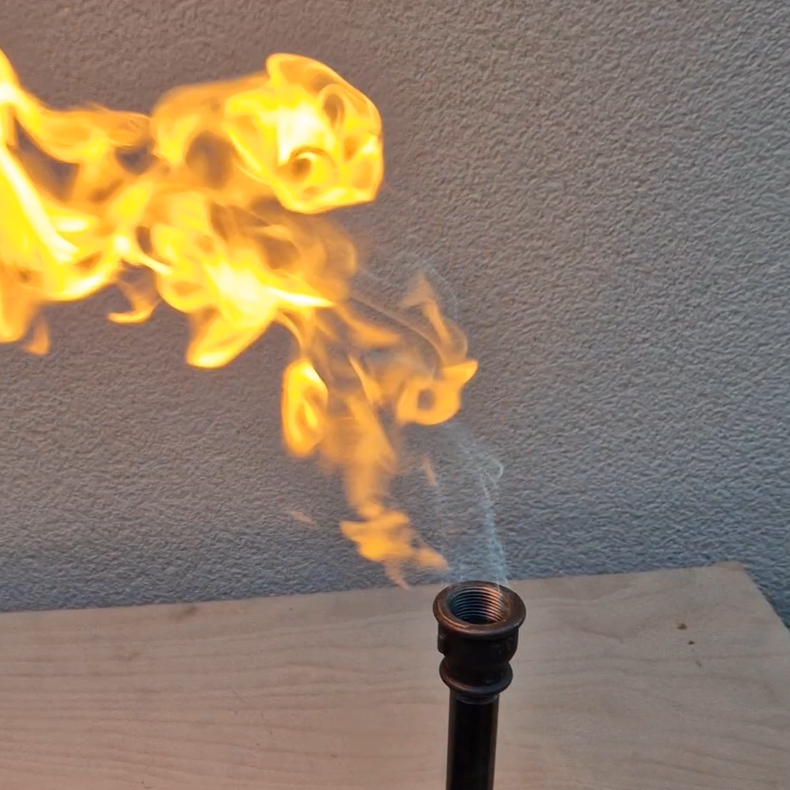
- Flames rich in soot appear bright yellow or orange, because glowing carbon particles emit visible light when heated.
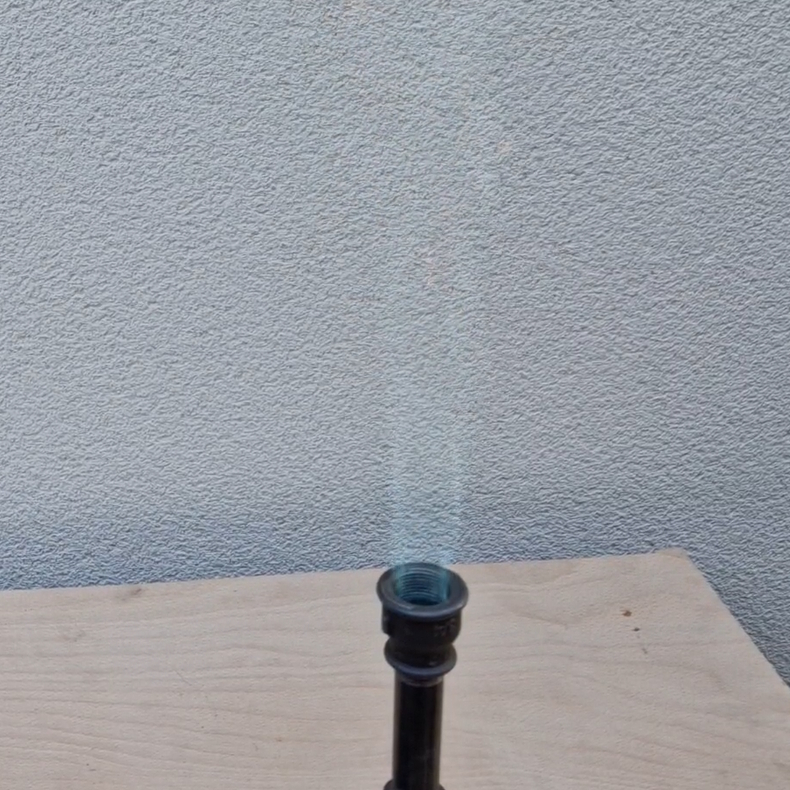
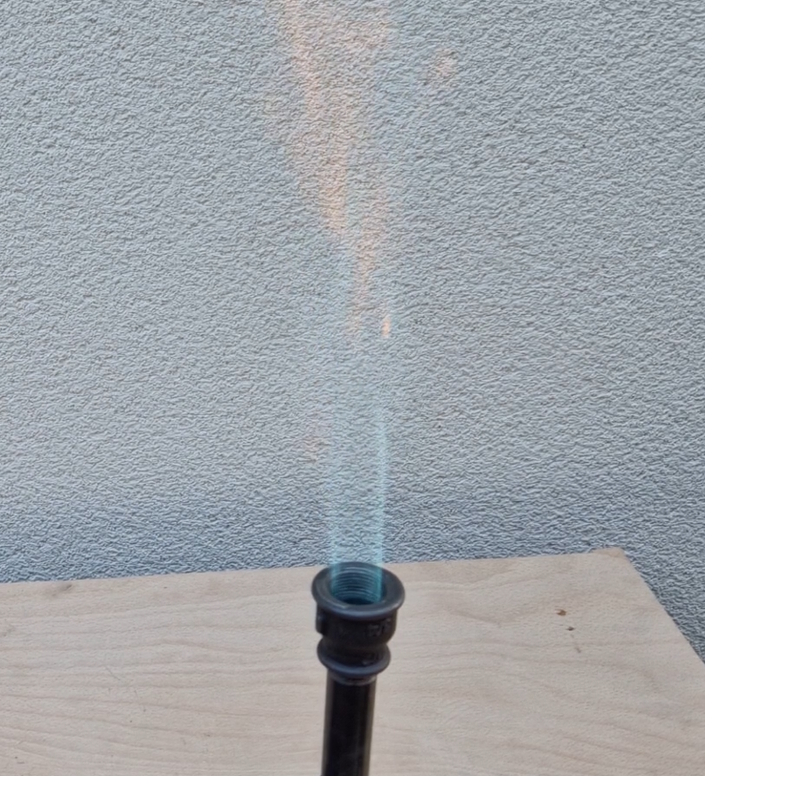
- Clean‑burning fuels such as natural gas or propane produce blue or nearly invisible flames when supplied with sufficient oxygen because they produce few glowing particles.
- A reducing atmosphere is often recognisable by its hazy nature.
Conclusion
Taking account of the combustion process and the way different fuels behave is crucial for designing pottery kilns and for trouble-shooting any existing fuel-fired kiln.
Reduction firing opens additional creative opportunities, but does require careful control and additional safety considerations.
Efficient burning requires the correct mix of air and fuel. Very slow or stalling temperature rise in the kiln can be caused by either excess air, or by too much fuel and insufficient air.