Design requirements
The kiln was designed to be a practical kiln for an individual ceramist working on hand-built sculptural and domestic pieces. It is also intended for trialling a novel form of construction, testing new refractory and insulation combinations, and for exploring a previously proposed heat recovery system.
The main design requirements and constraints were as follows:
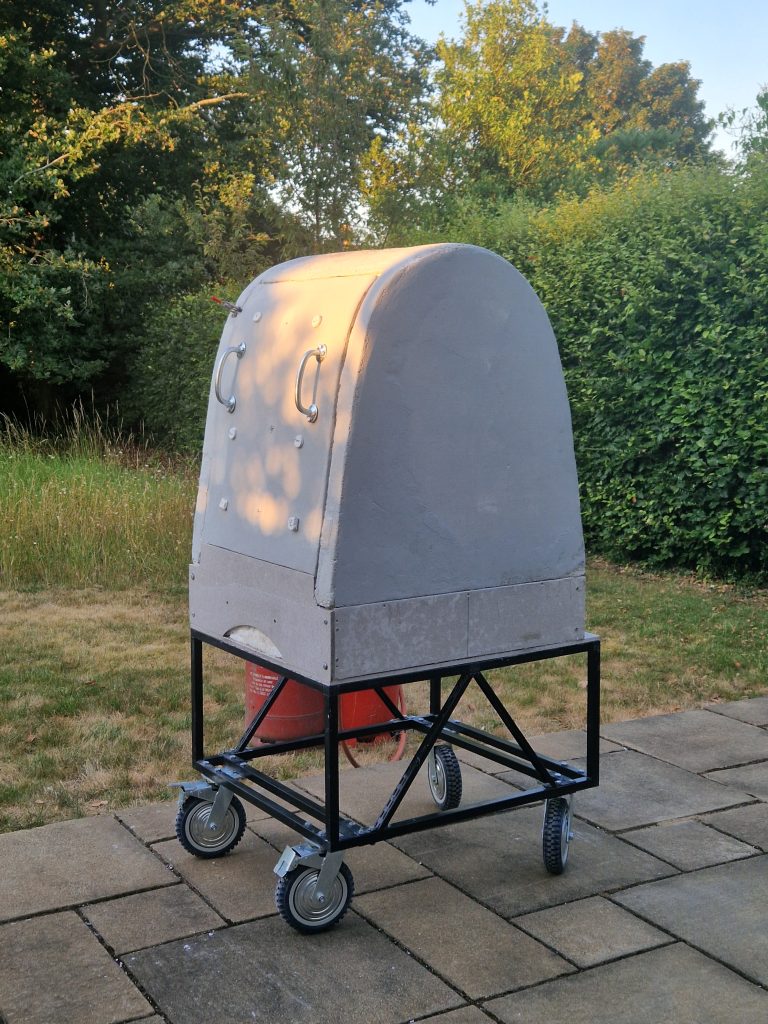
- The kiln is for use outdoors in a UK suburban setting, but since there is no suitable location for a permanent structure, it would either have to be possible to disassemble and rebuild, or it would need to be mobile.
- It is intended to fire variable size individual work pieces, up to 600mm (2ft) high, rather than repetitive domestic ware.
- To allow for porcelain firing if wanted, maximum operating temperature is 1350 °C [2460 °F].
- It won’t be used for commercial production, so set-up time before a firing is not critical, but for ease of use, front-loading is preferred to top loading.
- It must be buildable with modest DIY skills and hand tools including power tools.
- Must be capable of repeatable firing and atmosphere profiles for exploring creative options including reduction firing.
Design Interpretation – as built
Structure
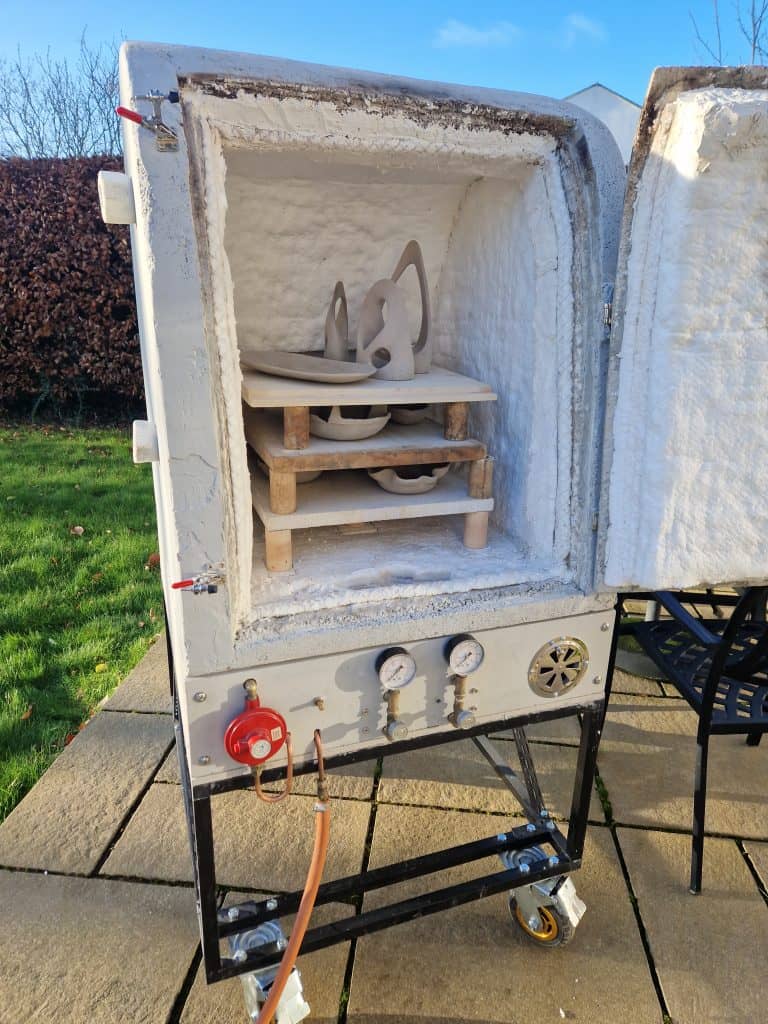
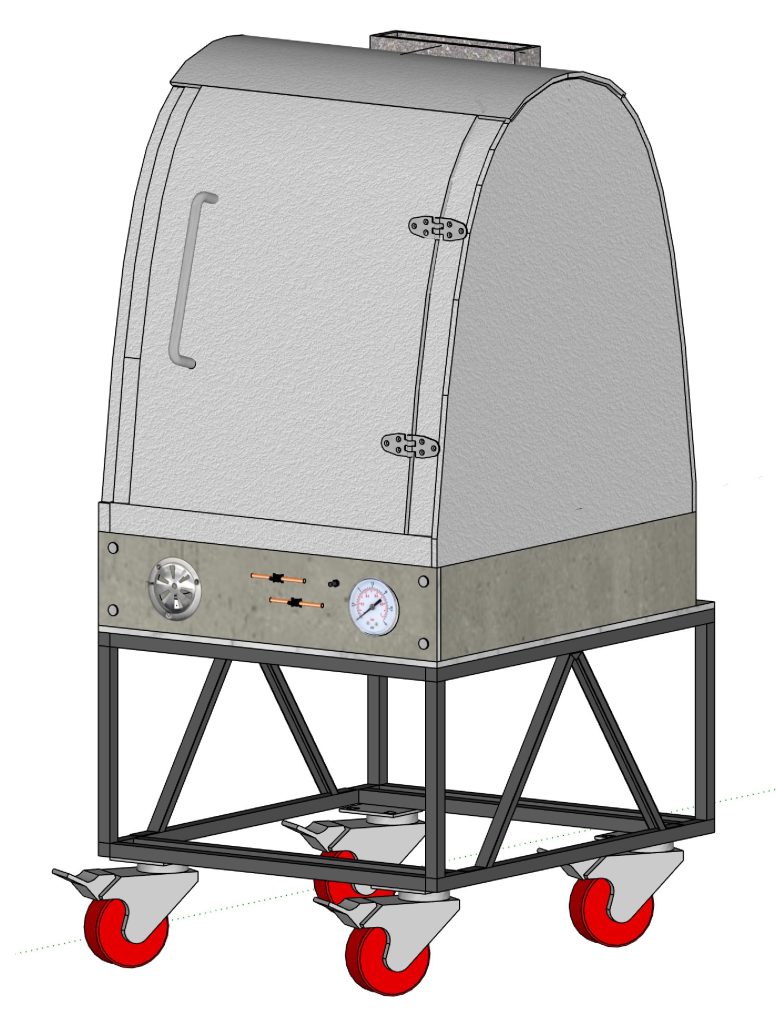
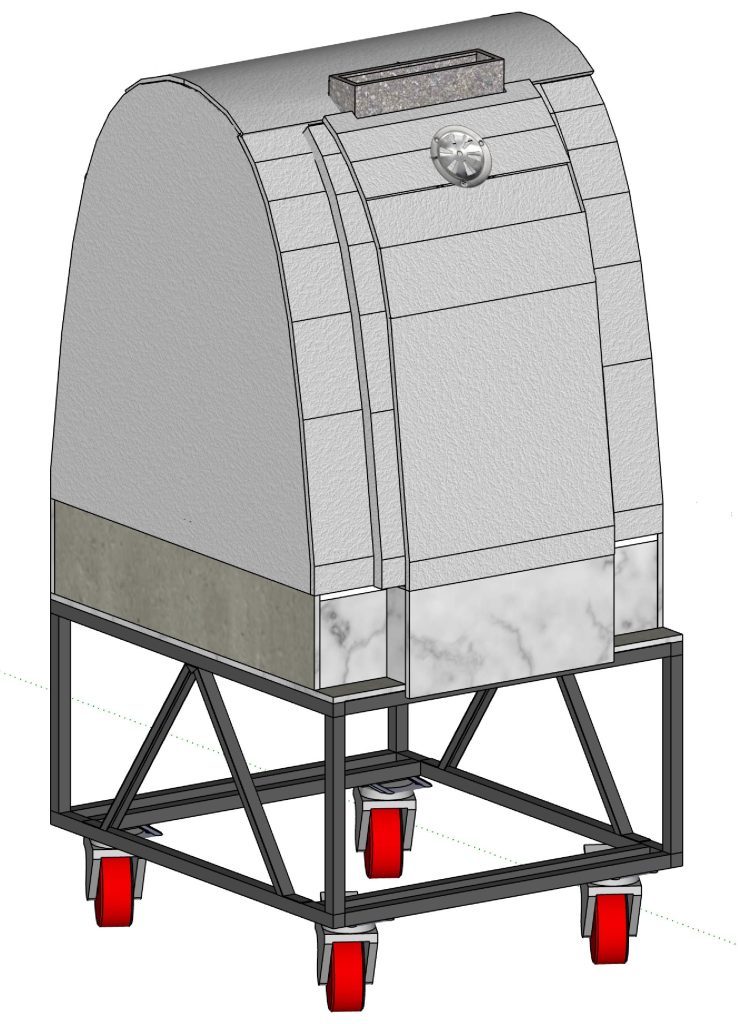
The main structure is a catenary arch form cast in sections using a multi-layer sandwich consisting of ceramic fibre blanket with a hard refractory hot face and an ultralight concrete outer face. It is built on a mobile steel base, but the catenary arch requires no further bracing as it is an inherently stable form. Width is minimised to allow reasonable manoeuvrability, and there is good access for loading through a full sized front door opening.
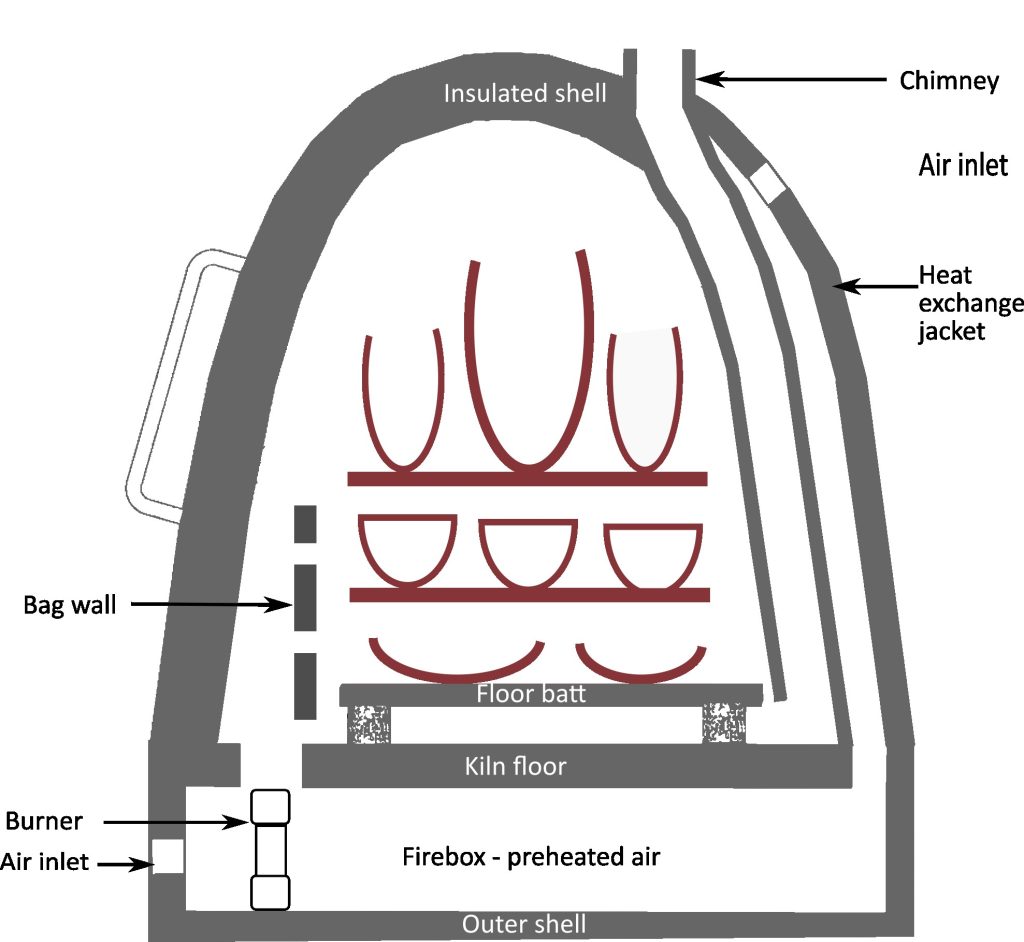
An enclosed chamber below the main kiln structure provides a firebox area used as part of the experimental heat recovery system.
The kiln fires front to back, with gas burner at the front and chimney at the back. The flue opening is at floor level, centred in the rear wall directly below the kiln floor batt, following the downdraft principle. To minimise heat loss, the chimney is shaped to follow the catenary curve.
- Catenary internal dimensions: 690 × 625 × 575 mm (height × depth × width) [27 × 25 × 23 in].
- Firing volume: approx. 200 litres [7.1 cu ft].
- Outer parts of the shell structure were precast; other parts were built up in situ.
Burner Rating and Gas Supply
The energy requirement, based on the dimensions and construction materials, is estimated at about 25kW (85,300 BTU/hr) with no allowance for heat recovery. Fuel is LPG (propane) from a twin-cylinder setup using twin 19kg cylinders with an adjustable pressure regulator up to 2bar (30psi), capable of delivering up to 6kg/hr.
- Main burner: 25 kW (85,300 BTU/hr) naturally aspirated multi-flame burner that distributes the heat across the width of the kiln.
- Pilot/preheat burner: 1.2 kW (4,000 BTU/hr) with combined jet, venturi, and flame port operates at 37 mbar [0.54 psi] via a secondary regulator.
- Safety shut-off: A flame failure device shuts off the gas in the event of flame failure and incorporates a push‑button override for ignition.
Heat recovery system
Heat is recovered from the chimney through a heat exchange jacket surrounding the chimney. The preheated air is drawn into the preheat firebox, where it is used for combustion. The target temperature for preheated air is 300oC [570 °F].
See Separate post with Details of the Heat Recovery System
- Air enters the heat exchanger near the top of the jacket and is regulated by an adjustable shutter.
- A second shuttered air inlet at front of the kiln allows air to bypass the heat exchanger to regulate temperature.
- The gas burner is located in the preheat chamber at the front of the kiln, with flame directed up and over a bag wall.
- Various parts have been modified since the first build, and the photo does not show the adjustable vent at the front of the kiln.
SAFETY NOTICE
We do not provide professional advice. Users must comply with local safety regulations.
See disclaimer